
How to Curate Yourself to Death
Streaming algorithms promise total choice, so why are our film tastes shrinking?
For CRIT-ISH
Contracting a taste by accident
Taste isn’t born in a sterile lab; it’s usually contracted by accident. Growing up with broadcast TV meant submitting to the luck of the draw: flipping channels and swallowing whatever the airwaves served up. No percentage match, no micro-genre tags like “Quirky 90s Rom-Coms set in Bookstores.” Just a film meeting you halfway in the dark, indifferent to whether you were having a good time or a mid-life crisis.
My first encounter with Mulholland Drive happened past midnight when I was in my teens—the unhinged hour when the weirdest cinema slipped through the grid while censors slept. I had zero context and no business watching it. By the credits, I was deeply bewildered, slightly rattled, and entirely transfixed. Little did I know that disorienting accident was my formal initiation into David Lynch—and the start of a lifelong habit of falling for movies that refuse to hold your hand.
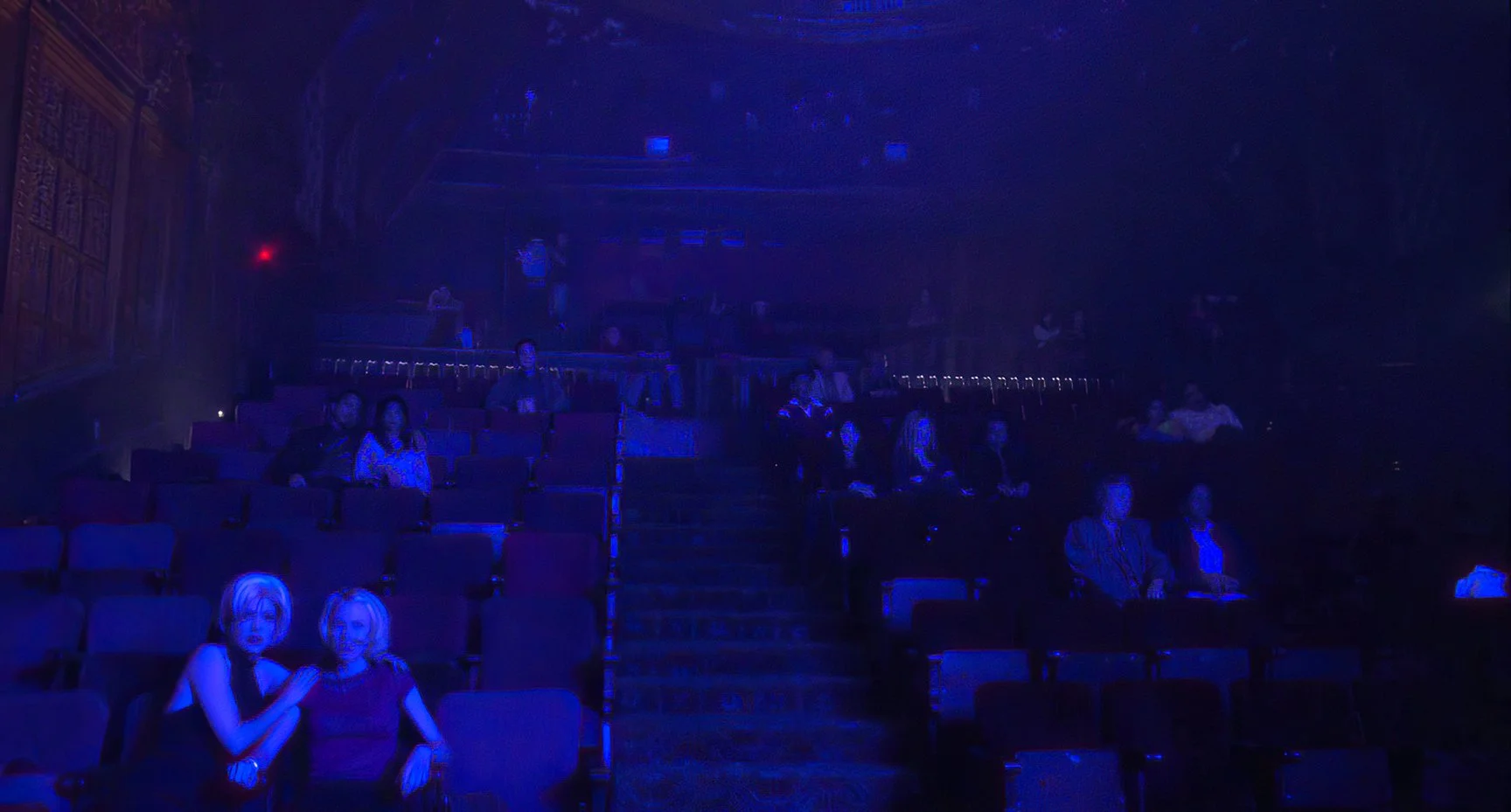
Laura Harring and Naomi Watts in the Club Silencio sequence of Mulholland Drive (2001).
Image: Courtesy of StudioCanal / The American Society of Cinematographers.
Compare that to today: long before your thumb hovers over the play button, an algorithm has already run a diagnostic on your soul, calculated your discomfort threshold, and served up a potato casserole of the familiar. It’s slick, frictionless, and treats you like an invalid. If we only ever consume what we’re predicted to tolerate, how do we ever stumble across the things that shatter us open?
The illusion of free will
TV was never an innocent sanctuary. Programmers decided primetime, rights, budgets, and rigid guides dictated what reached our living rooms. If you left the house on a Thursday evening, you simply missed the long-awaited Jim Carrey marathon. That was the deal.
Crucial to that arrangement was one glorious detail: the schedule didn't care about your feelings. A midnight movie didn't need to resemble whatever you’d numbly watched three days earlier. It had zero interest in catering to your delicate Victorian sensibilities. It was just there,
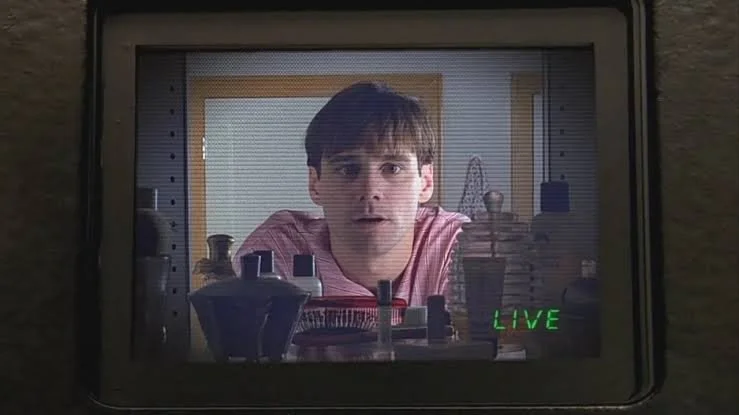
Jim Carrey in The Truman Show (1998).
Image: Courtesy of Paramount Pictures / The American Society of Cinematographers.
Streaming flipped that relationship. We gained control over when to watch, but handed over the keys to what gets shown next. Open Netflix, and you aren’t looking at a neutral library. You’re staring at an aggressively curated shop window engineered to keep your eyeballs glued to the glass. Recommendation engines track viewing habits, pause points, and the exact second you abandoned a film out of sheer boredom, using every crumb of data to decide what gets pushed to the front and what stays buried.
The Trojan horse on your homepage
The manipulation begins long before you read a synopsis or watch an auto-playing trailer. Back in 2017, Netflix publicly explained its dynamic artwork strategy: illustrating how Good Will Hunting could be repackaged depending on who was looking—a cozy shot of Matt Damon and Minnie Driver for romance fans, or a grinning Robin Williams for comedy seekers. For Pulp Fiction, it dangled Uma Thurman or John Travolta accordingly. Same film, completely different Trojan horse.
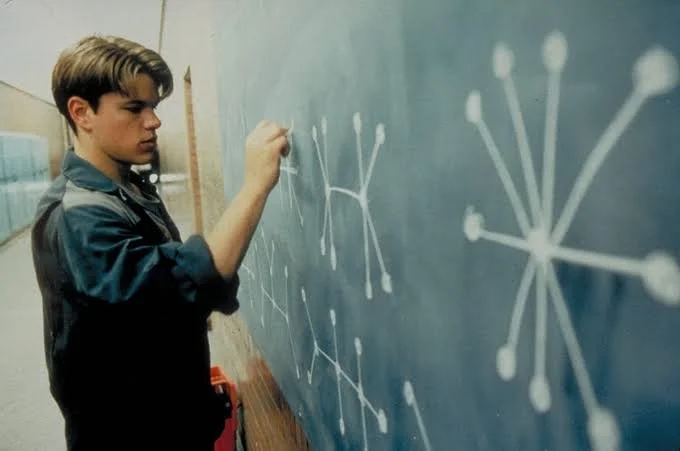
Matt Damon in Good Will Hunting (1997).
Image: Courtesy of Miramax Films / The American Society of Cinematographers
From a capitalist standpoint, it’s brilliantly manipulative. A familiar face acts as psychological bait, tricking you into crossing over into unfamiliar territory. But it raises an offensive question: how much does art need to be sanitized and stripped of its weirdness before we can be trusted to click?
A great film always defies its marketing trap. You might arrive for Robin Williams' sympathetic face, but you leave grappling with class resentment and institutional rot. The algorithm gets you through the door like a pushy salesman. The cinema happens when the film betrays the reason you showed up.
Broadening horizons or beige loops?
It would be simple to cast the algorithm as a corporate monster bent on flattening human taste into a beige paste. But reality refuses to cooperate. In research published by Netflix in July 2026, a model estimated that its recommendation engine actually spreads viewing across a wider variety of titles than a top-ten popularity system, delivering a lifeline to mid-tier films that lack multi-million-dollar marketing budgets.
Of course, that is Netflix’s own internal PR measuring catalog distribution rather than individual human courage. It doesn't prove viewers are turning into adventurous cinephiles, but it complicates the lazy narrative that algorithms are evil and predictable, funneling everyone into the same three viral shows.
Harry Dean Stanton and Nastassja Kinski in Paris, Texas (1984).
Image: Courtesy of Argos Films / ArchiKino Archive
Still, there is a world of difference between finding another film that satisfies an existing craving and stumbling into something that gives you a new appetite. Our viewing history is a graveyard of things we’ve already tried. Sometimes you pick a paint-by-numbers thriller simply because your brain is fried after an insufferable day at work. It would be a tragic punishment if your least ambitious Tuesday evening became the permanent blueprint for your cinematic future.
The argument for human chaos
This is precisely where human critics, festival programmers, cultural publications, and cinephile friends earn their keep. A genuine human recommendation offers something an algorithm cannot: an argument. A critic makes an unfamiliar director’s vision feel urgent; a programmer pairs unrelated films to reveal a secret conversation; a friend insists an obscure feature is non-negotiable and remains triumphantly correct.
Human curators aren't infallible saints—critics can be snobbish, and friends miscalibrated—but their recommendations carry passion, perspective, and voice. They give us something real to clash against.
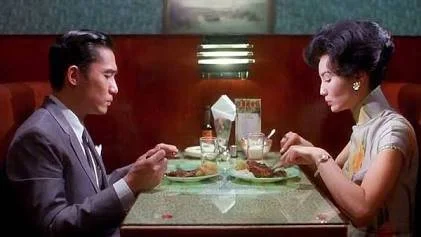
Tony Leung and Maggie Cheung in In the Mood for Love (2000).
Image: Courtesy of Criterion Collection / Film at Lincoln Center Archive
We don’t need to abandon streaming's convenience to reclaim discovery. We can actively seek out human voices, follow a bizarre review into a rabbit hole, or choose a film on a whim without demanding an algorithmic safety net.
I want a recommendation system to understand my taste. But I also want it to respect me enough to leave room for me to change it. Because some of the most transformative films you will ever see are the ones you never had the foresight to ask for.
Sources & References
Netflix TechBlog (2017): Artwork Personalization at Netflix – Detailed analysis of dynamic thumbnail targeting and visual personalization using Good Will Hunting and Pulp Fiction as case studies.
Netflix Research (July 2026): Netflix Recommendation Systems & Catalog Distribution – Research on algorithmic targeting and title discovery across long-tail catalog items.